Launch offer — valid today only

📄 Digital book in PDF · read it on your phone or print it

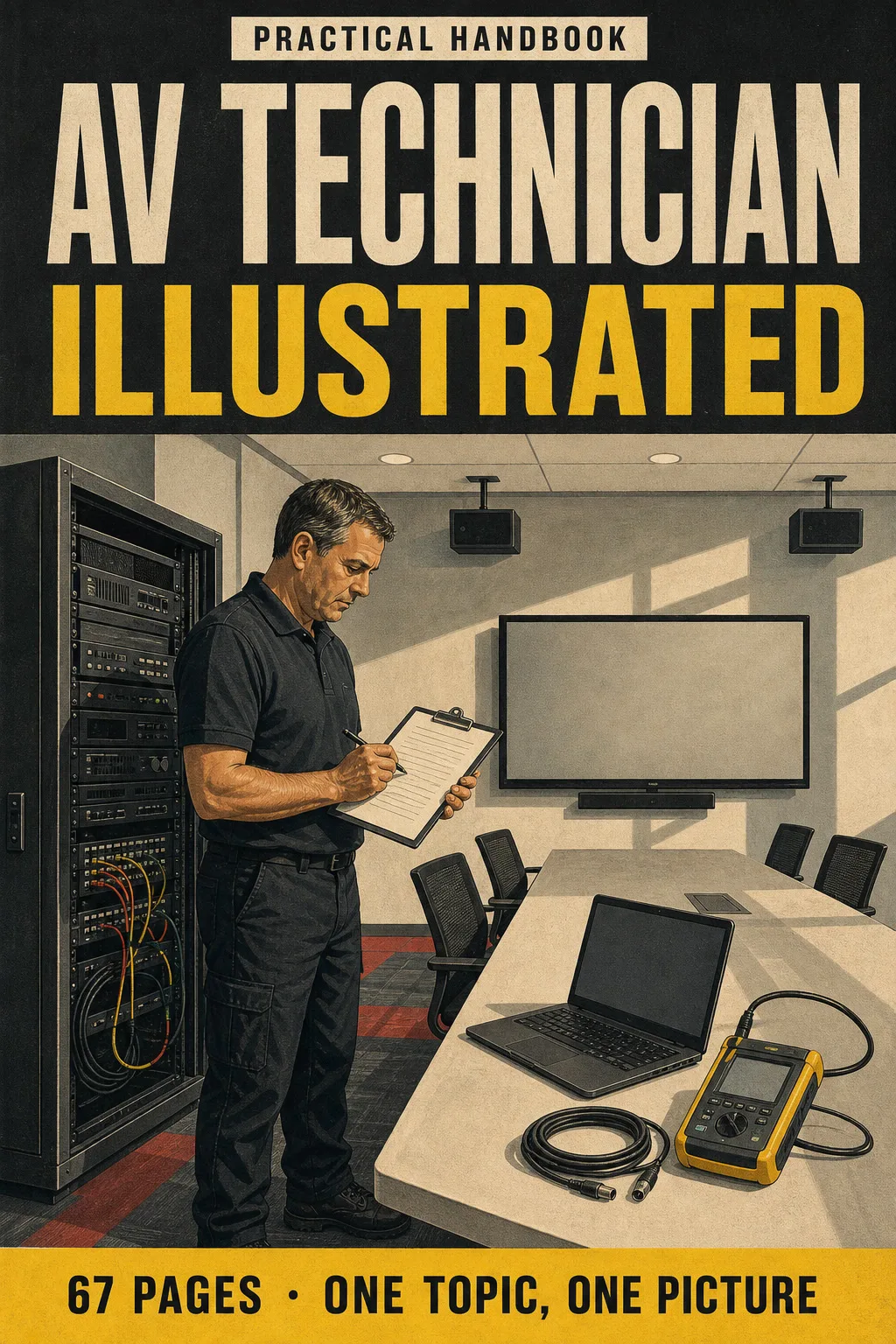
AV Technician Illustrated: CTS Exam Prep in Drawings, Every Signal Path in the Same Order One Topic on Every Page

Signal flow, viewing distance, decibels, mic patterns, gain structure, 70-volt systems, AV over IP, rack power and troubleshooting. Every topic gets its own page: the drawing first, then what you need to remember. 67 illustrated pages.

START STUDYING THIS WAY

🔒 Secure checkout · PDF by email · 30-day guarantee

Every topic, its own pageThe signal path drawn, with the explanation right beside it
67 illustrated pages9 parts, from what the CTS exam covers to the exam-day checklist
Up-to-date sourcesChecked against the CTS Exam Content Outline, ANSI/AVIXA standards and the NEC (NFPA 70)
PDF by emailFormat

Look Inside the Book

Every page has one big drawing and a box with the numbers and steps you need to know:

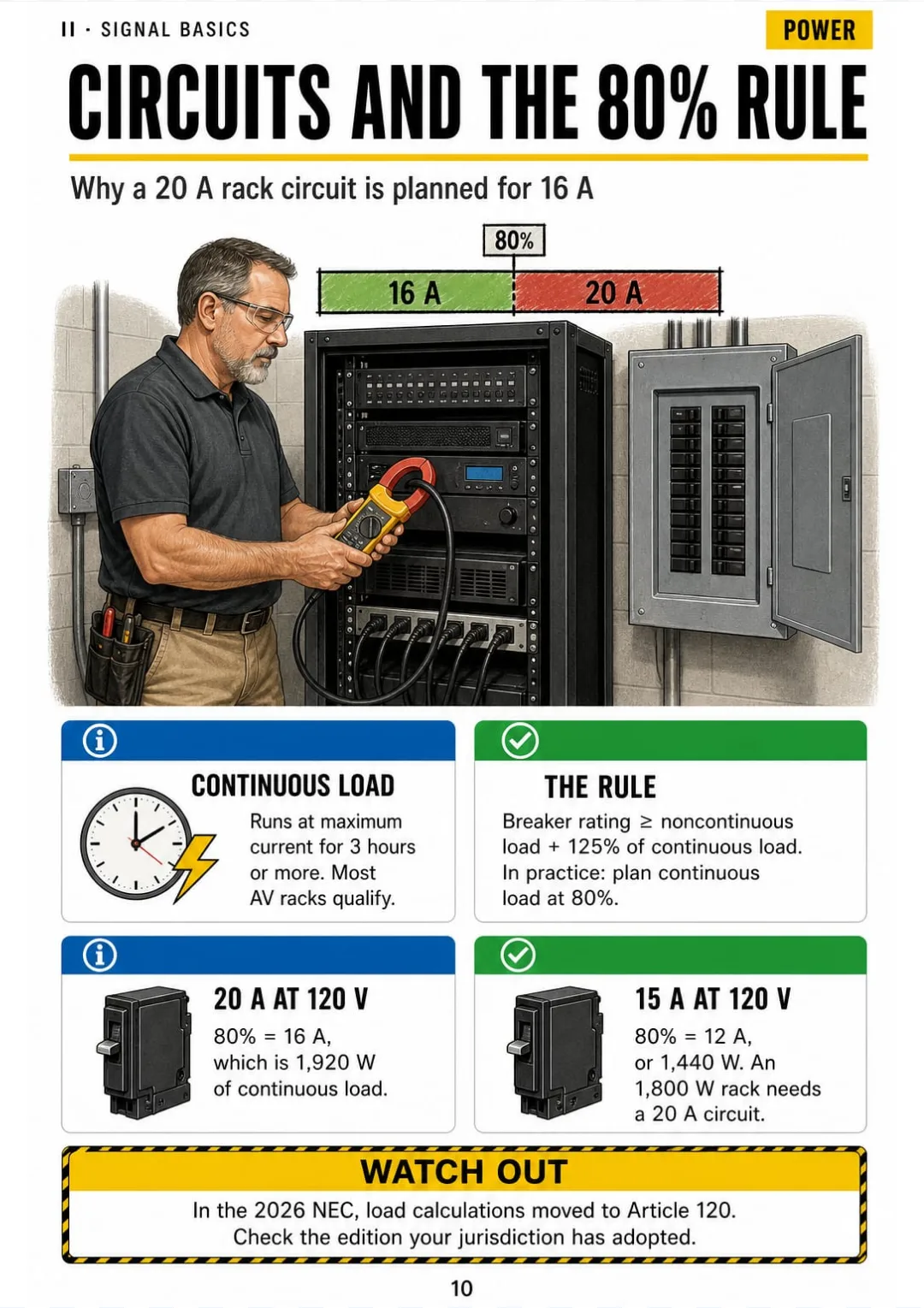
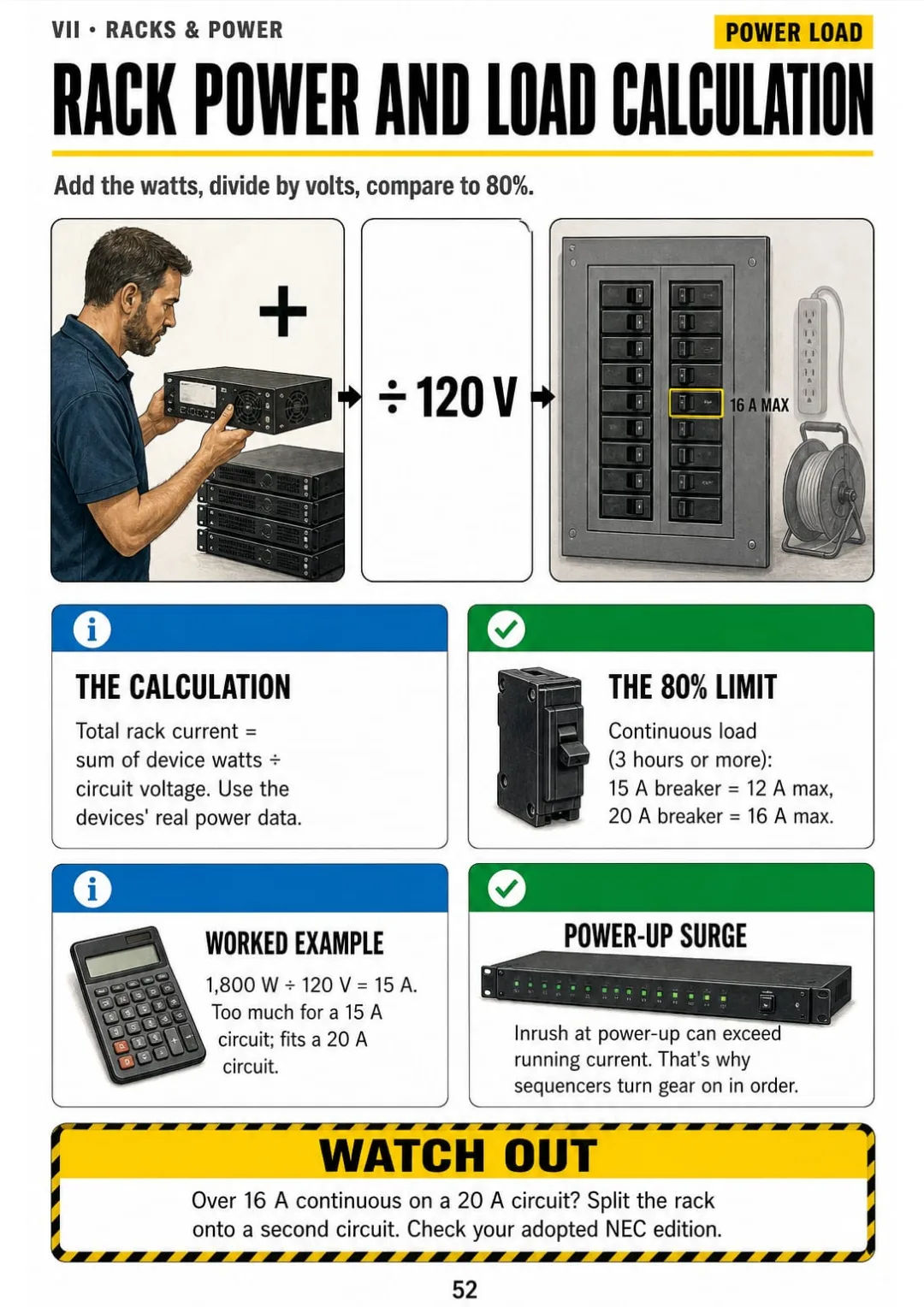
20 A × 80% = 16 A = 1,920 W of continuous load on 120 V.
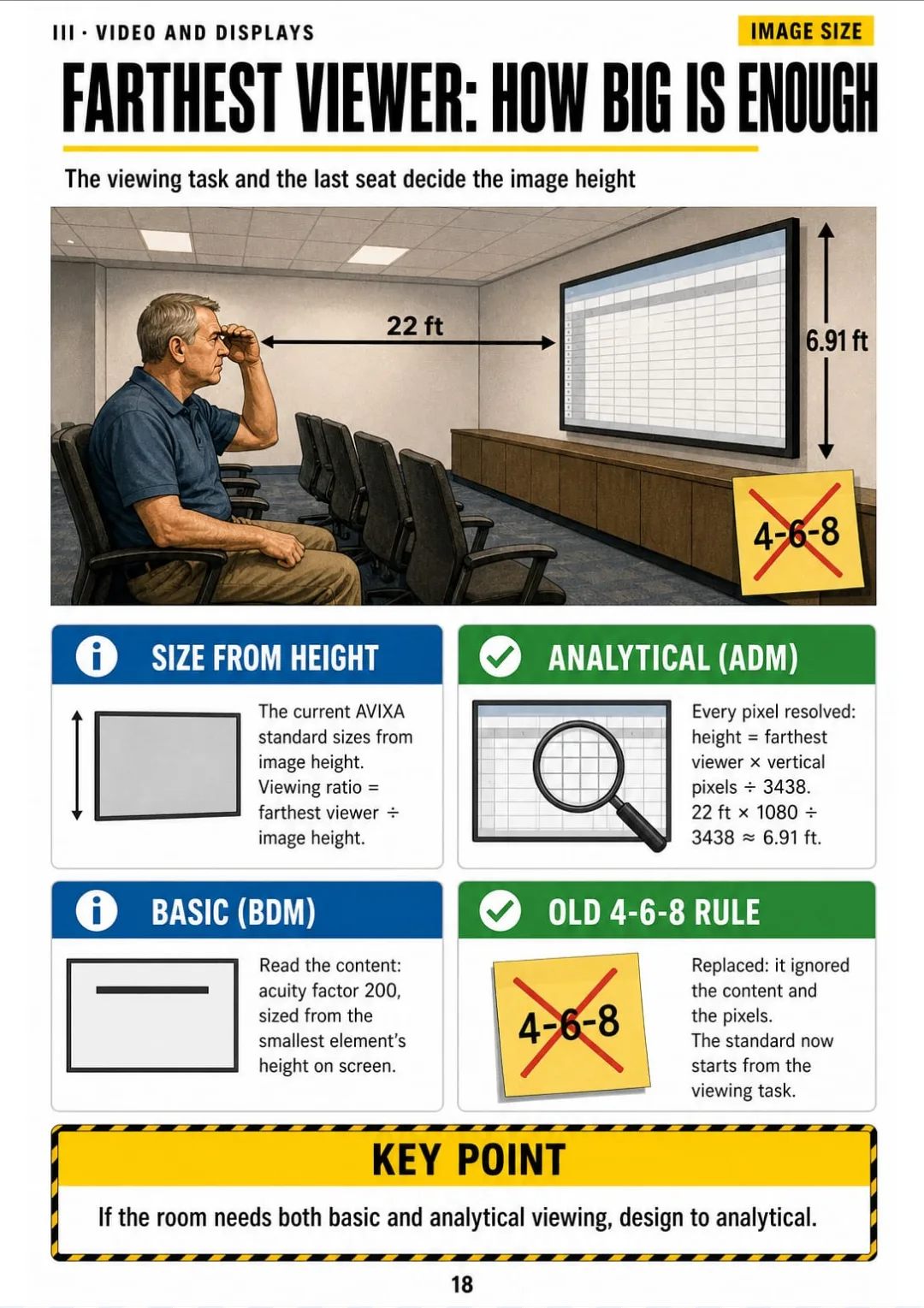
ADM: 22 ft × 1080 ÷ 3438 ≈ 6.91 ft minimum image height
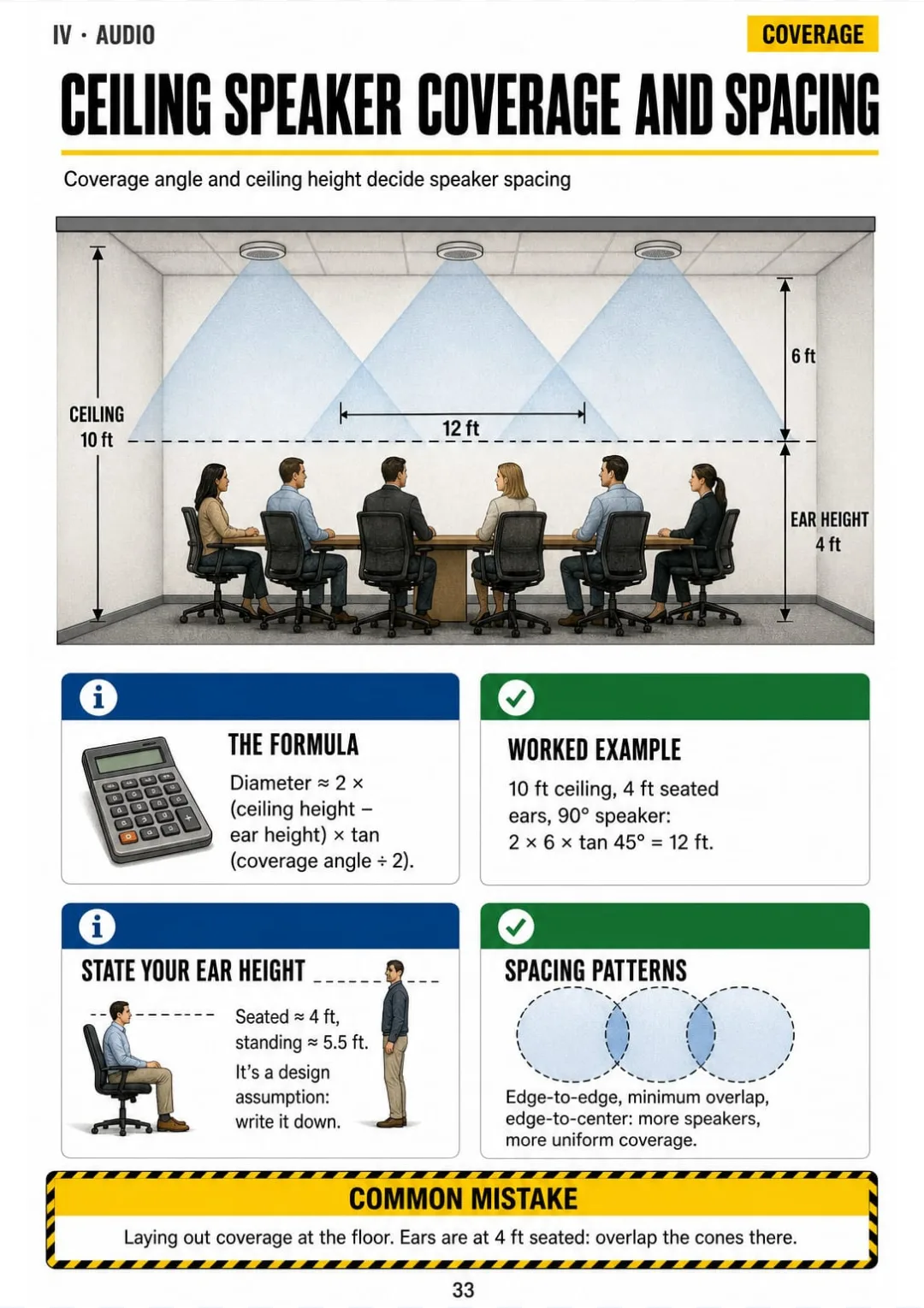
10 ft ceiling, 90° speaker, seated ears: about 12 ft coverage.
1,800 W ÷ 120 V = 15 A: over 12 A on a 15 A circuit, under 16 A on a 20 A circuit.
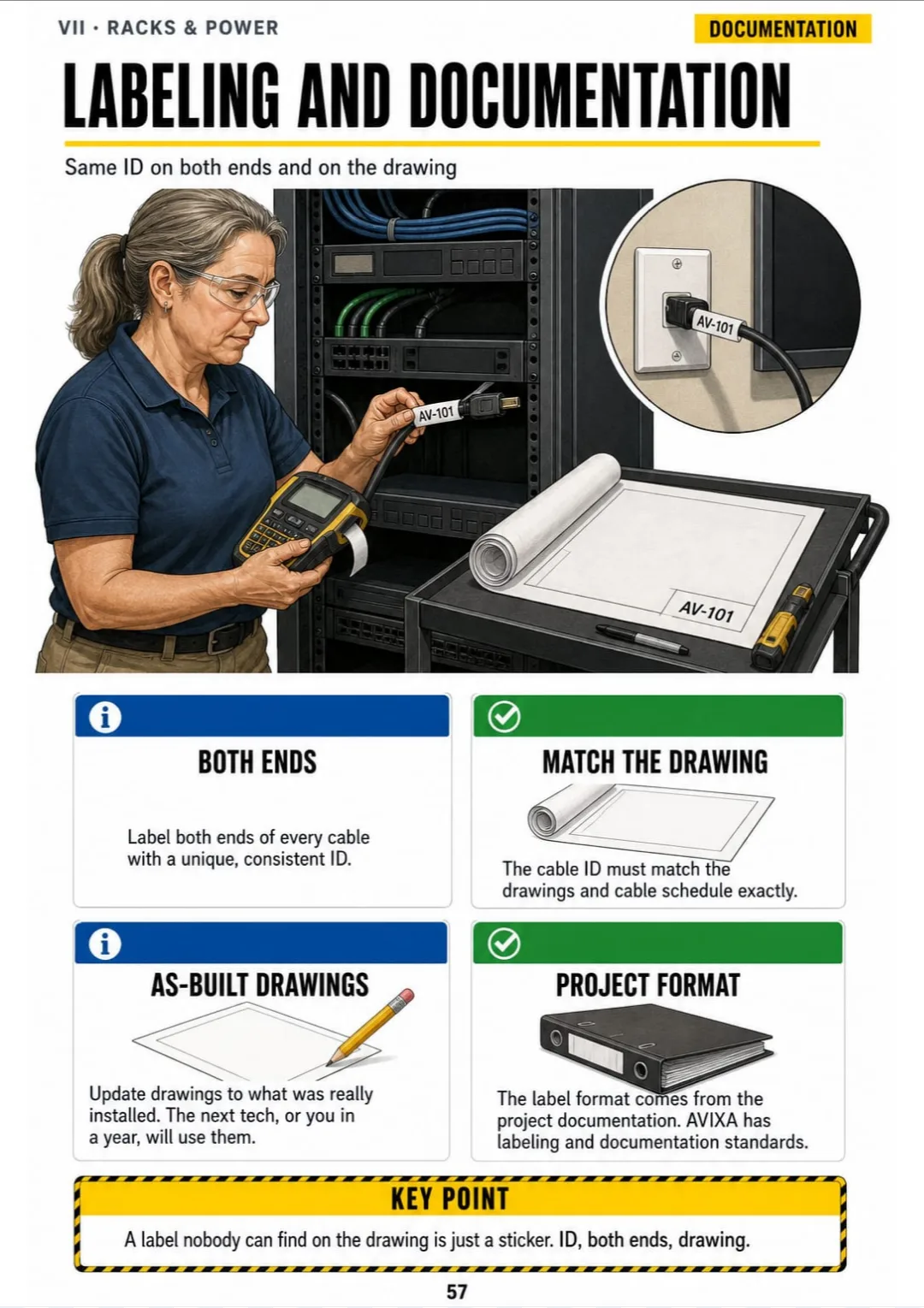
Label both ends with the same ID shown on the drawing, and keep the as-builts updated.
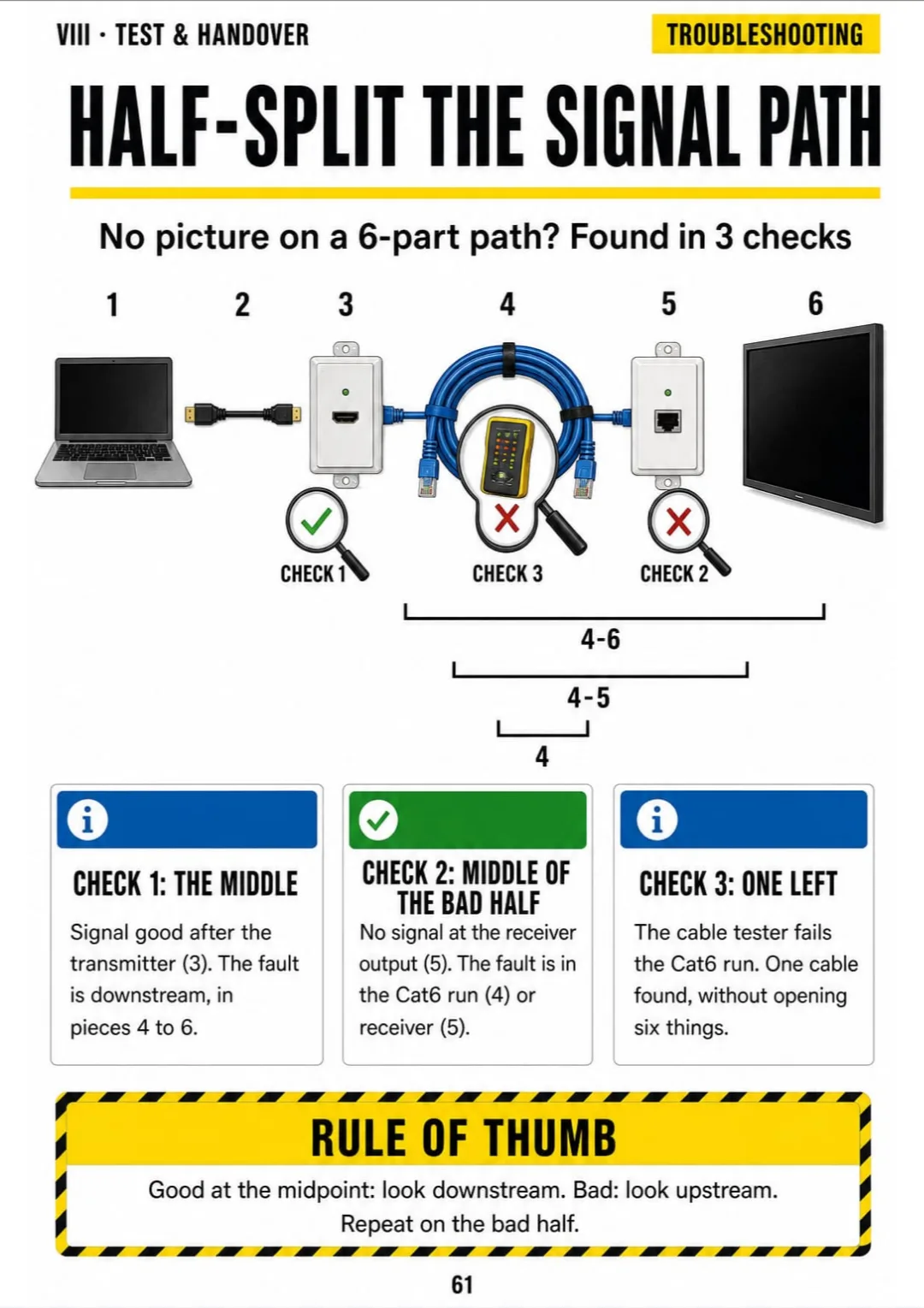
Half-split method: 6 pieces in the chain, the fault found in 3 checks
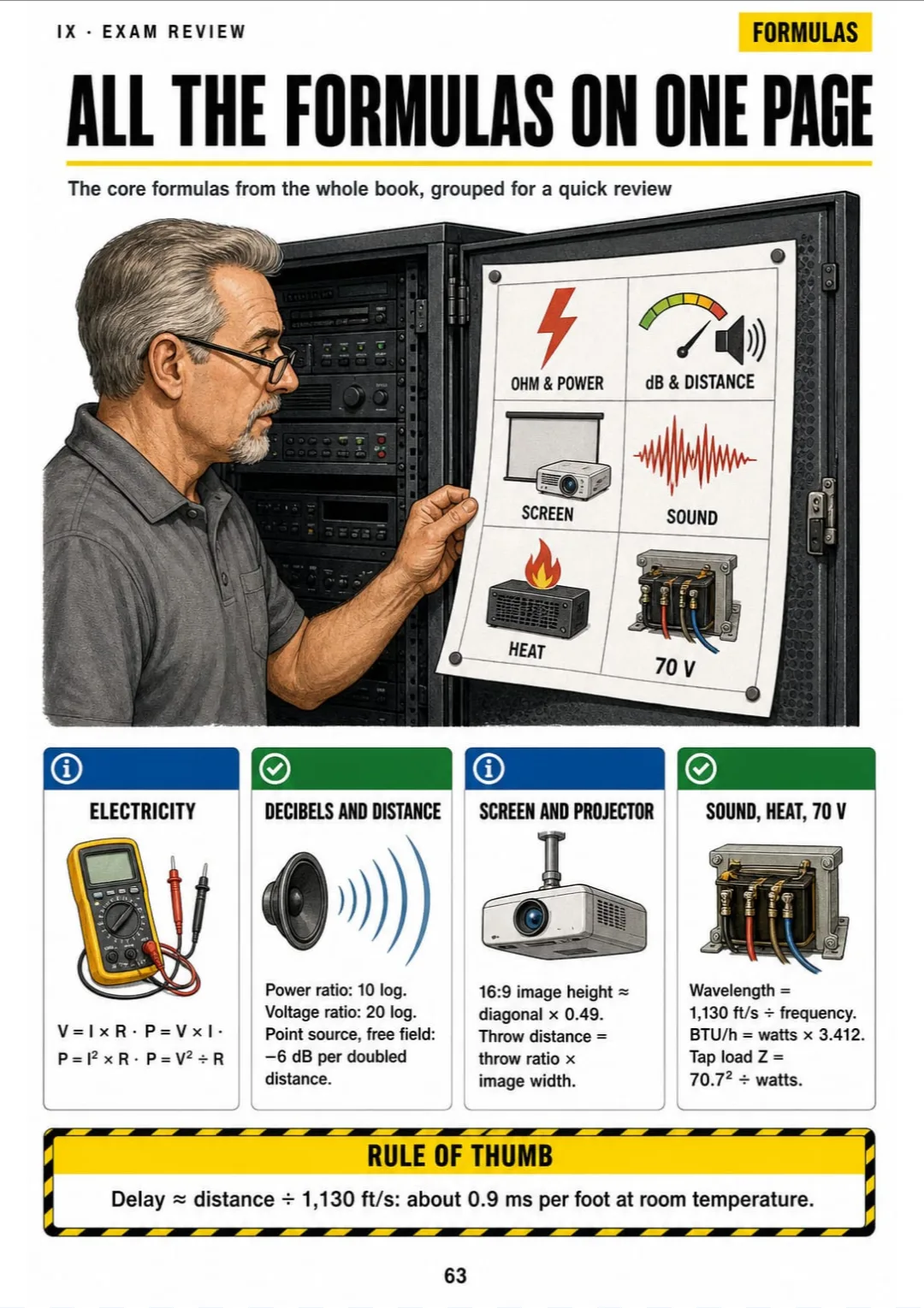
Ohm's law, dB, inverse square, throw ratio, BTU and 70 V tap load on one sheet
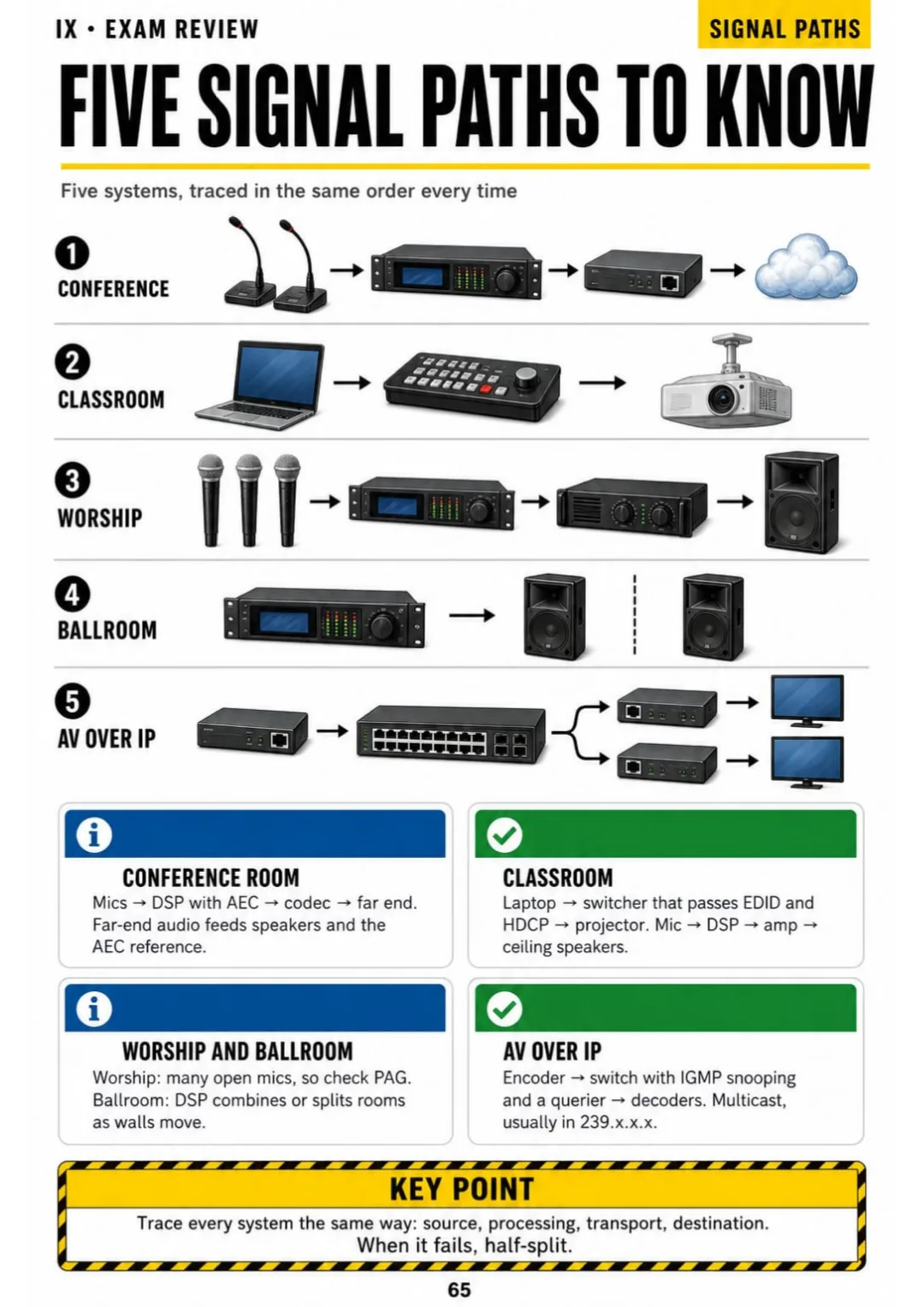
Conference room, classroom, worship, ballroom and AV over IP: five paths, one order

Swipe to see more →

These are real pages from the book. The table of contents is the full one: 9 parts and 63 topics.

The Problem Isn't You. It's How It Was Explained to You.

You're setting a lectern mic in a church sanctuary, the floor monitor is already on the stage, and the pastor's first word turns into a squeal.

You know cardioid and supercardioid from the spec sheets. But the study guide covers pickup patterns in paragraphs about off-axis rejection and null points, and where the monitor goes never sticks.

10 ft ceiling, 90° speaker, seated ears: about 12 ft coverage.

In the book, that same mic is one page: each pattern drawn from above, with the dead zone marked. Cardioid: monitor straight behind. Supercardioid: monitors off to the rear sides.

The rest of the audio gets the same treatment: gain structure, feedback and potential acoustic gain, 70-volt taps, speaker coverage, echo cancellation. One page each.

You look at the drawing, you place the monitor, and you can say why it works without opening the guide again.

COMPARE FOR YOURSELF

Same Topic, Two Ways to Study It

THIS
  • The study guide: line after line
  • Viewing distance math explained only in words
  • You walk into the exam unsure
The minimum image height for analytical decision making is determined by the distance to the farthest viewer, the vertical native resolution of the displayed content, and a constant derived from the angular resolution of the human eye. Where the farthest viewer distance is expressed in feet, the product of that distance and the vertical pixel count is divided by the constant 3438, yielding the minimum image height in the same unit, which must subsequently be converted to a corresponding diagonal according to the aspect ratio of the display.
FOR THIS
  • The farthest viewer in one drawing
  • The formula and the numbers in a box
  • You see it and you get it
ADM: 22 ft × 1080 ÷ 3438 ≈ 6.91 ft minimum image height
CONTENTS

Take a Look at the 9 Parts and 63 Topics

The exam and the method, electricity and signal basics, video and displays, audio, networks and AV over IP, control and collaboration, racks and installation, test and troubleshooting, and the exam-day review: 67 pages, all illustrated.

IThe Exam and the Method · pp. 5-8
  1. What the CTS Exam Actually Covers
  2. The AV Project as One Flow
  3. The Signal Path Method
  4. How to Read the Math Pages
IIElectricity and Signal Basics · pp. 9-15
  1. Ohm's Law and the Power Formula
  2. Circuits and the 80% Rule
  3. Analog vs Digital Signals
  4. Balanced vs Unbalanced Audio
  5. Decibels Without Fear
  6. Signal Levels: Mic, Line, Speaker
  7. Grounding and Ground Loops
IIIVideo and Displays · pp. 16-25
  1. Resolution, Pixels and Aspect Ratio
  2. Image Size from the Diagonal
  3. Farthest Viewer: How Big Is Big Enough
  4. Closest Viewer and Viewing Angles
  5. Projection: Throw Ratio
  6. Brightness and Contrast in a Real Room
  7. Video Bandwidth: Why 4K Needs More Pipe
  8. HDMI, DisplayPort and Their Limits
  9. EDID: The Handshake Before the Picture
  10. HDCP: Why the Screen Goes Black
IVAudio · pp. 26-36
  1. Sound, Frequency and Wavelength
  2. Inverse Square Law
  3. Microphones: Type and Pickup Pattern
  4. Gain Structure Step by Step
  5. Feedback and Potential Acoustic Gain
  6. Loudspeaker Impedance: Series and Parallel
  7. 70-Volt Distributed Systems
  8. Speaker Coverage and Spacing
  9. DSP: EQ, Compressor, Delay
  10. Echo Cancellation in Conference Rooms
  11. Room Acoustics: Reverb and Noise
VNetworks and AV over IP · pp. 37-44
  1. IP Addresses and Subnets
  2. Switches, VLANs and QoS
  3. Unicast vs Multicast
  4. IGMP Snooping and the Querier
  5. Bandwidth Budget for AV over IP
  6. Networked Audio: Clock and Latency
  7. Cat6, Fiber and the 328 ft Limit
  8. TCP, UDP and Ports
VIControl and Collaboration Systems · pp. 45-49
  1. Control Signals: IR, RS-232, IP
  2. The User Interface That Works
  3. Video Conferencing Room Layout
  4. Cameras: Field of View and Framing
  5. Assistive Listening
VIIRacks, Power and Installation · pp. 50-57
  1. Rack Units and Rack Layout
  2. Heat Load: Watts to BTU
  3. Rack Power and Load Calculation
  4. Cable Types and Fire Ratings
  5. Conduit Fill and Bend Radius
  6. Separating Signal from Power
  7. Mounting Displays and Speakers Safely
  8. Labeling and Documentation
VIIITest, Handover and Troubleshooting · pp. 58-62
  1. Site Survey: What to Check
  2. System Verification Before Handover
  3. Handover and Training the Client
  4. Troubleshooting: Half-Split the Signal Path
  5. Maintenance and Service Records
IXReview for Exam Day · pp. 63-67
  1. The Formulas on One Page
  2. Most Frequent Mistakes in the Math
  3. Signal Paths to Know by Heart
  4. Words That Get Mixed Up
  5. Exam Day Checklist

One Page, One Topic, All Clear

Think of it this way:

You're standing in an empty boardroom with the client. The back row sits at 22 feet and they want to know if the display they picked is big enough. They want the answer now, not tomorrow.

You open the page on the farthest viewer and see the room drawn from the side: the last seat, the screen and the math worked out. 22 ft × 1080 ÷ 3438 ≈ 6.91 ft of image height. A 75-inch display is about 3 ft tall, and you can show them why it falls short.

Label both ends with the same ID shown on the drawing, and keep the as-builts updated.

Same with decibels, gain structure, rack power, multicast and the half-split method: each one on its own page.

AV Technician Illustrated is 9 parts and 63 topics, all drawn, and at the end all the formulas on one page, the most frequent math mistakes and an exam-day checklist.

What you see drawn, you don't have to memorize.

What's Inside AV Technician Illustrated:

Ipp. 5-8

The Exam and the Method

What the CTS exam covers, the AV project as one flow, the signal path method and how to read the math pages.

IIpp. 9-15

Electricity and Signal Basics

Ohm's law and the power formula, the 80% rule, analog vs digital, balanced audio, decibels, signal levels and ground loops.

IIIpp. 16-25

Video and Displays

So you can tell a client if the screen is big enough: resolution and aspect ratio, image size, farthest and closest viewer, throw ratio, contrast, video bandwidth, HDMI limits, EDID and HDCP.

IVpp. 26-36

Audio

So you place mics and monitors and set gain without trial and error: frequency, inverse square law, mic patterns, gain structure, feedback and PAG, speaker impedance, 70-volt systems, coverage, DSP, echo cancellation and room acoustics.

Vpp. 37-44

Networks and AV over IP

IP addresses and subnets, VLANs and QoS, unicast vs multicast, IGMP snooping, the AV over IP bandwidth budget, networked audio, the 328 ft limit and ports.

VIpp. 45-49

Control and Collaboration Systems

IR, RS-232 and IP control, user interfaces that work, conference room layout, camera framing and assistive listening.

VIIpp. 50-57

Racks, Power and Installation

Rack units and layout, heat load in BTU, rack power, cable fire ratings, conduit fill, separating signal from power, safe mounting and labeling.

VIIIpp. 58-62

Test, Handover and Troubleshooting

Site survey, system verification, handover and client training, the half-split method and service records.

IXpp. 63-67

Review for Exam Day

All the formulas on one page, the most frequent math mistakes, signal paths to know, words that get mixed up and an exam-day checklist.

At the end of the book: A review section with all the formulas on one page, the most frequent math mistakes and an exam-day checklist.
Plus: 2 Free Books

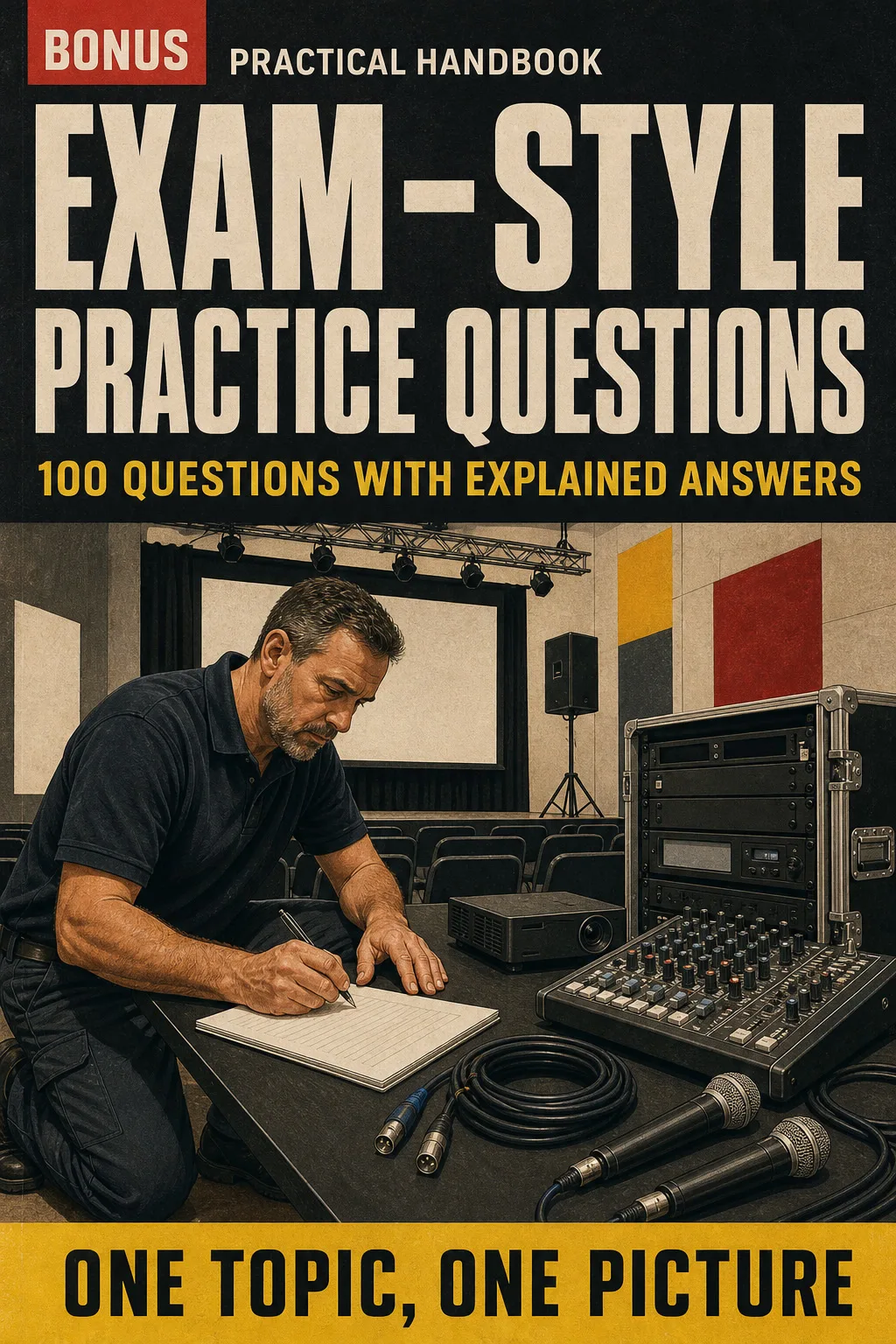
Exam-Style Practice Questions: 100 Questions with Explained Answers

BONUS 1: «Exam-Style Practice Questions: 100 Questions with Explained Answers»

Value on its own: US$ 17.90

Practice the way the exam asks, and see why each answer is right, page by page, before test day.

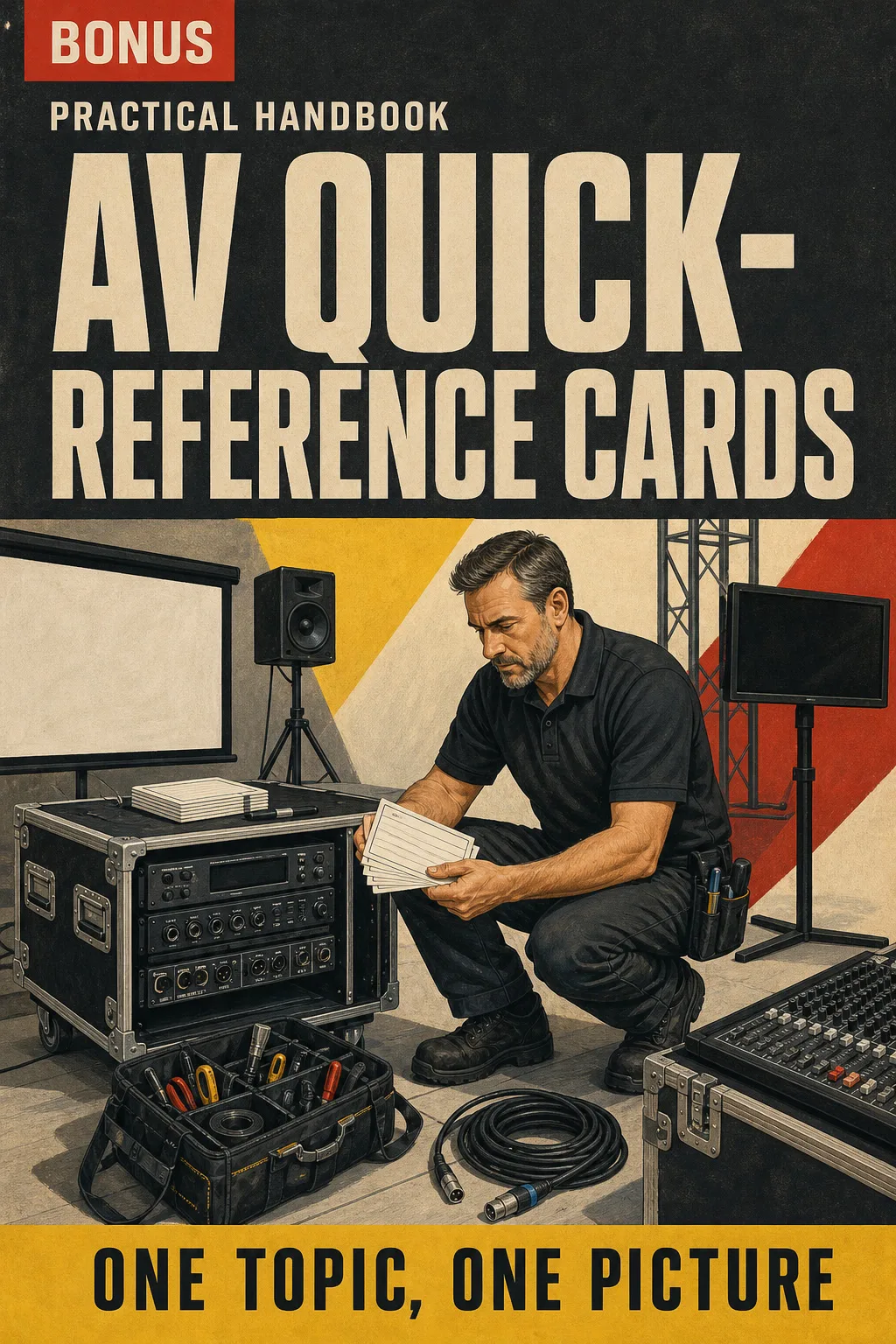
AV Quick-Reference Cards

BONUS 2: «AV Quick-Reference Cards»

Value on its own: US$ 14.90

Formulas, signal paths, connectors and the most common mistakes on one card each, to review in five minutes or keep in your truck.

AV Technician Illustrated with 2 Free Books

  • AV Technician Illustrated: 67 illustrated pagesUS$ 63
  • BONUS 1: Exam-Style Practice Questions: 100 Questions with Explained AnswersUS$ 17.90
  • BONUS 2: AV Quick-Reference CardsUS$ 14.90
  • High-resolution PDF to printIncluded
Total value US$ 95.80
YOUR PRICE:
US$ 27
You save US$ 68.80
YES, I WANT AV TECHNICIAN ILLUSTRATED FOR US$ 27

📄 This is a digital PDF book sent to your email: nothing is printed or shipped.

Secure purchaseEncrypted payment30-day guarantee

PDF by email: We email you AV Technician Illustrated as a PDF, together with the two free books. It's a single payment: no installments, no extra charges.

Who This Book Is For

You're studying for the CTS

You're studying for the CTS

Each exam topic on its own page, in the same order every time, so a night or a weekend of study actually adds up.

Your exam date is set

Your exam date is set

The formulas on one page, the most frequent math mistakes and 100 practice questions with explained answers to review before test day.

You already work in AV

You already work in AV

Viewing distance, gain structure and rack power drawn out, so you can explain on site why things work the way they do.

Everything You Get Today

US$ 95.80US$ 27
YES, I WANT AV TECHNICIAN ILLUSTRATED FOR US$ 27

📄 This is a digital PDF book sent to your email: nothing is printed or shipped.

30DAYS
GUARANTEE

30-Day Guarantee

Try AV Technician Illustrated for 30 days, bonus books included.

We refund everything if the file won't open, if the book isn't what you see here, if you were charged twice or if the email doesn't arrive. Just email us.

You pay once. No subscriptions.

Frequently Asked Questions

Is this for me if I've worked in AV for years and now need the CTS?

Yes. It doesn't explain what an HDMI cable is. It goes straight to what the exam asks and what you usually do by eye on the job: viewing distance, dB, gain structure, bandwidth and rack power. Unlike the study guide or videos, each topic is one page, drawn and worked out in feet and inches, in the same order every time, so you can find it again the night before.

Where does the content come from?

It's checked against the current AVIXA CTS Exam Content Outline and Exam Guide, the ANSI/AVIXA audiovisual standards and NFPA 70 (NEC), and it follows the topics of the general CTS exam (not CTS-D or CTS-I). It explains them in our own words and drawings; no standard text or tables are reproduced.

Is this official material?

No. It's an independent study book, not affiliated with or endorsed by AVIXA or NFPA. It doesn't give you a certificate, renewal units or the CTS credential: only passing the exam does that.

Does it replace a course or formal training?

No. It's a study and review aid to use alongside your training, manufacturer instructions and local codes.

Are the practice questions the ones on the exam?

No. They're written for this book in the style of the exam, with the answer explained, and they're not official exam questions.

When and how do I get it?

As a PDF by email, at the address you enter at checkout. The 2 bonus books come the same way.

Do I have to pay every month?

No. It's a one-time payment.

Can I have it on paper?

We don't ship paper: it's a PDF by email. But it's made to print, so you can keep the pages you use most in your truck or binder.

How does the refund work?

You have 30 days. We refund everything if the file won't open, if the book isn't what you see on this page, if you were charged twice or if the email doesn't arrive: just email us.

Before You Close This Page

No more rereading pages that don't stick.

Viewing distance, dB and rack power: you see them drawn and you're set.

You walk into the exam knowing where everything is.

Drawings make studying faster.

The book is right below.

One-time payment: US$ 27 · Guarantee: 30 days · PDF by email

YES, I WANT AV TECHNICIAN ILLUSTRATED FOR US$ 27

📄 This is a digital PDF book sent to your email: nothing is printed or shipped.